
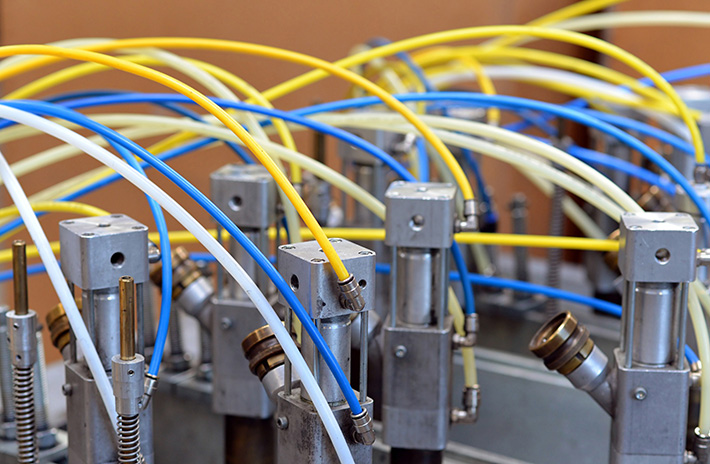
Odds are, you use a hydraulic system every day. You get into your car, step on the brake, start it up, and turn the steering wheel to begin your ride to work, the store, or school. Automobiles use hydraulic systems for brakes and steering, among other things. Hydraulic systems use fluid under pressure to move things. These things can range from small, intricate parts to large machinery used in construction.
So, what are the components of a hydraulic system?
The basic components are a reservoir, fluid, valves, pumps, motor, pipes, actuator, and filter. As with any other kind of machine, the parts of a hydraulic system vary according to function. For instance, there are different types of valves depending on what the system will be used for.
Using water to move things is not a new idea. It has been around for thousands of years. But harnessing the power of water, or more commonly today hydraulic oil or fluid, greatly advanced in the seventeenth and eighteenth centuries with Pascal’s principle and Bernoulli’s theorum, as they both dealt with fluid under pressure.
So, What is a Hydraulic System?
A hydraulic system uses a pump powered by a motor to extend pressure on fluid through a pipe which transfers energy to create movement. The pressure created in this system is measured in pounds per square inch (psi) and can be in the thousands. The energy involved in this transfer determines how powerful the system will be. The circuit can be very complex, made up of various valves, pipes, pistons, and other features depending on what it will be used for, or it can be as simple as a squirt bottle.
Hydraulics work as a great power source because liquids are easier to move under pressure than solids, but more stable than gases. The energy needed to exert pressure on hydraulic fluid to make a giant crane on a construction site work is minimal in comparison to other forms of accomplishing the same task. Hydraulic systems work fast, work strong, and work clean because the fluid is always contained.
So, What are Some Examples of Uses for Hydraulic Systems?
Hydraulic systems are used in many different forms of machinery. Today, most large machinery uses at least one type of hydraulic feature. Farm machinery uses hydraulics in tractors, sprayers, mixers, irrigation systems, harvesters, and loaders. This technology has made farming quicker and easier.
Anything that uses brakes uses hydraulics. This includes airplanes and automobiles. Applying pressure to your brake transfers pressure to the pistons that push brake fluid through cylinders and causes the brake pad to be pressed onto the rotor and stopping your vehicle. It is a fast, often life-saving system that we tend to take for granted.
Related Questions
So, Why is There a Filter in Hydraulic Systems?
A filter is an important part of hydraulic systems because it keeps the fluid free from material that could cause blockage. There are various filters designed for different jobs, including low-pressure filters that block contaminants before they reach the fluid. High-pressure filters clean the fluid after it has been through the pump and help control its effectiveness. The main reason for hydraulic system failure is contaminants in the line, so the filters are a critical part of the circuit.
So, What Liquids Are Used for Hydraulic Systems?
Although water was the original material used in hydraulics, it is not used in hydraulic systems today because of its freezing and boiling points and other factors. Hydraulic fluid can be made up of different types of mineral or petroleum-based oils that do not have the limitations of water.
Recap
Whenever you put pressure on liquid to move something, you use a form of hydraulics. The amazing systems in use today take this technology to incredible heights. You can drive safely to the grocery store and buy reasonably priced food because of the practical application of hydraulics.
Servo Kinetics in Ann Arbor provides hydraulic repair services to keep your industrial hydraulic system performing the way it should be, with efficiency and optimal performance. Conducting regular maintenance including system checks, the longevity of your hydraulic system increases while minimizing failures and maximizing operations.
Our industrial hydraulic repair solutions are efficient and accurate as we make sure to deliver on time at a competitive price. Visit us online for a list of brands and components we service including hydraulic pumps and motors, Beach Russ, Vickers, and more. If you are in need of engineering services or new pumps and motors, contact us to speak with a specialist.