
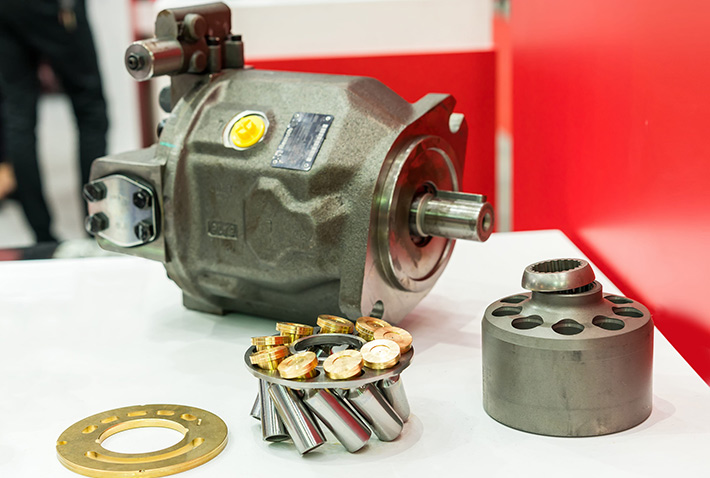
A hydraulic motor that has been repaired may be ready for use when it leaves the repair shop, yet still encounter difficulties after installation. In some cases, the problem does not lie within the motor at all; it may be in a small line that receives little attention until the seals fail or performance drops again.
The line is the case drain.
The drain lines for a hydraulic pump or motor carry the internal leakage away from the housing and send it back to the reservoir.
During normal operation, this flow protects the component by giving leaking oil a low-pressure route out of the casing. However, if the drain line is restricted, too small, clogged, or poorly routed, pressure will build up inside the housing.
That pressure must escape; it usually shows up as leaking seals, increased heat, or a component failing again too soon after repair.
Why Case Drain Flow Matters
Hydraulic pumps and motors have tight internal clearances but are not fully sealed, so a small amount of fluid flows through these internal areas while the equipment is operating. This leakage is expected because it lubricates moving parts and carries heat away from the housing.
The case drain offers a route for the fluid to flow back to the tank.
If the path is open and correctly routed, the component will function as intended; but if the drain path is restricted, pressure within the case rises, and the shaft seals and housing seals may have to carry forces they were not meant to handle.
A maintenance team might notice the seal leaking and assume the seal was the weak point; in fact, the seal could have been the first obvious indication of a drain problem.
What Backpressure Can Do To A Repaired Unit
After installation, case drain backpressure can cause a number of annoying symptoms. A motor may start off smoothly but then start to leak as the machine heats up. A pump may get hotter than is expected. A shaft seal may fail long before it should.
The new component might be blamed since it is the most recent addition to the system; this is a reasonable response, particularly since production has already been halted once. However, replacing or repairing the component will not solve the problem if the drain circuit is causing the damage.
Backpressure can also show up as intermittent symptoms: the machine may operate normally at low load but then have problems during a more demanding cycle. The oil temperature may rise when the machine is operated for a long time. A leak might only show up after the system has run long enough for flow and heat to increase.
Record those patterns again before you remove the unit.
The Drain Should Have A Clear Path Home
The case drain line must provide a low-pressure route to the reservoir; it should be sized correctly and protected against restrictions. Also, arrange the route so it won’t be crushed, pinched, or damaged by normal machine movement.
Exact requirements vary by component and system design, so follow the manufacturer’s information wherever available. If older equipment has incomplete documentation, examine the layout more carefully before fitting a repaired unit.
A quick check before you start will prevent a much bigger problem later. Make sure the drain port is clear, inspect the hose, watch for restrictive fittings, and verify that the return line isn’t sharing pressure with another section of the circuit.
Why Testing The Component Alone Is Not Always Enough
Repair testing can show that a rebuilt unit operates properly under controlled conditions, which is valuable information; but once the unit is back in the machine, the surrounding circuit becomes part of the outcome.
Backpressure from the drain line might stress the motor in ways it didn’t during bench testing. The repair may be satisfactory, but installation conditions could still damage the unit.
That is why maintenance teams should look beyond the component whenever a recent repair is leaking or running hotter than expected. The question must consider the circuit, the condition of the fluid, and the lines connected to the unit.
What to Check Before Calling for Hydraulic Repair
Useful information doesn’t need to be complicated; note when the leak occurs, whether it varies with temperature, and whether it appears under a certain load. Also record any recent hose changes, fitting replacements, or rerouting that occurred around the time of the repair.
Photos also help. By clearly showing how the case drain is routed, the fittings, and the return connection, photos give the repair team a better starting point.
Servo Kinetics Inc. provides hydraulic repair, inspection, rebuilding, testing, and field support for industrial equipment. If a rebuilt pump or motor leaks, overheats, or fails sooner than expected, their team can help evaluate whether the component, the case drain path, or the surrounding hydraulic circuit is causing the problem.