
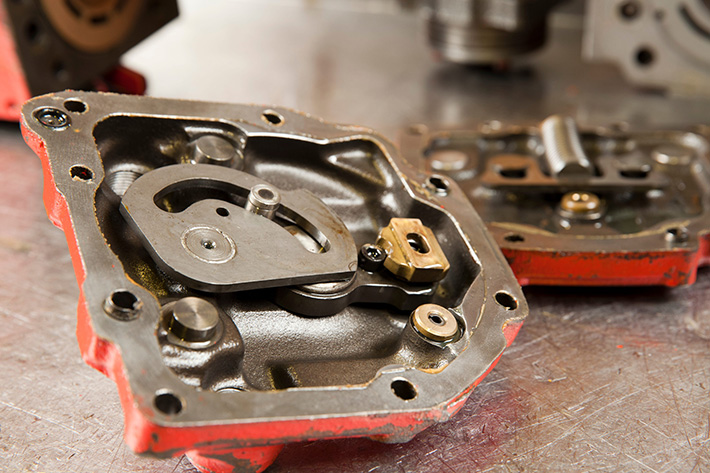
When a hydraulic pump reaches the repair shop, the machine that depended on it may already be running on a spare. Production wants the failed unit rebuilt, and everyone wants it back as quickly as possible.
Still, the damaged pump contains valuable information.
A careful teardown can reveal how the component operated and what conditions caused its failure. Wear marks may point toward contaminated fluid. Surface damage can indicate poor inlet conditions.
Other signs may suggest that the pump spent too much time operating under excessive heat.
During hydraulic repair, these clues can help prevent the rebuilt component from returning to the same conditions that damaged the first.
Cleaning Comes Before A Useful Inspection
A pump that has spent years in an industrial hydraulic system usually arrives coated in oil and accumulated residue. Internal surfaces may also carry deposits that make small wear areas hard to see.
Thorough cleaning gives technicians a clearer view of the parts once the pump has been disassembled.
The goal is to examine the condition beneath the oil rather than judging the unit only by its external appearance. A pump can look reasonably clean on the outside while showing substantial internal wear.
Once individual components are accessible, technicians can measure them and compare their condition with the clearances required for proper operation.
Scratches Can Point Toward Contamination
Hydraulic pumps depend on very small internal clearances. Hard particles circulating with the oil can damage those surfaces over time.
During teardown, technicians may find scoring or scratches on parts that should normally have a smoother working surface. The location and severity of that damage can indicate what passed through the pump.
Finding this type of wear also raises a question about the rest of the hydraulic system.
Rebuilding the pump restores the damaged component, but dirty oil remaining in the reservoir or lines may expose the repaired unit to the same material. Filters and system cleanliness may need attention before the pump returns to service.
Cavitation Leaves Its Own Evidence
A pump that cannot receive enough oil at its inlet can experience cavitation.
Low inlet pressure allows vapor bubbles to form in the hydraulic fluid. When those bubbles move into a higher-pressure area, they collapse against internal surfaces. Continued exposure can produce visible erosion.
That damage may look very different from ordinary mechanical wear.
When teardown evidence supports cavitation, attention should turn toward the pump inlet before the rebuilt unit is installed. Restrictions and unsuitable suction conditions may have contributed to the failure.
Replacing damaged internal parts without correcting the supply problem leaves the underlying cause in place.
Heat Can Change What Technicians Find Inside
Excessive hydraulic temperature affects both the oil and the components that depend on it for lubrication.
A machine operator may remember the system running hot, but an internal inspection can show whether prolonged heat contributed to the pump’s condition. Oil deposits or abnormal surface appearance can support what maintenance personnel observed while the machine was operating.
Heat can also change oil viscosity enough to affect lubrication and internal leakage.
This is why temperature information from the plant is useful when a failed pump is sent for repair. Physical evidence from the component makes more sense when technicians can compare it with what happened during operation.
Uneven Wear May Point Beyond The Pump
Some damage patterns prompt technicians to consider how the pump was installed or driven.
A shaft and its supporting components are intended to operate within particular mechanical conditions. Abnormal loading can place stress where it was never intended.
When wear is concentrated in an unusual area, simply replacing the worn component may leave an important question unanswered. The drive arrangement or mounting condition may deserve further inspection before the rebuilt pump returns.
This is especially important when a plant has experienced more than one failure on the same machine.
Repeated damage often warrants investigating the surrounding equipment rather than treating each failed pump as an isolated event.
Measurements Help Separate Reusable Parts From Damaged Ones
Visual inspection tells only part of the story.
Components can look serviceable while wear has changed critical dimensions. Measuring internal parts helps determine whether they can be reused or should be repaired or replaced during the rebuild.
This step also keeps the repair focused on the unit’s actual condition. Parts that meet requirements can be evaluated accordingly, while worn components get the attention they need.
After reassembly, performance testing provides another check by showing how the rebuilt pump behaves under operating pressure and flow.
Hydraulic Pump Repair Starts with a Thorough Inspection
A teardown should do more than create a pile of parts on a workbench. The condition of those parts can help explain why the pump stopped performing correctly.
That information is especially valuable when a plant wants to avoid another shutdown. The repaired pump can be returned to service with a better understanding of whether fluid condition or operating conditions need attention elsewhere in the system.
Servo Kinetics performs detailed inspection and rebuilding of industrial hydraulic pumps, motors, and other hydraulic components. Each repair begins with disassembly and cleaning so internal parts can be evaluated before the unit is rebuilt and performance tested.
When a hydraulic component fails, that process can provide more than a repair. It can also provide useful evidence about what the equipment experienced before it reached the shop. Call and speak to a hydraulic repair specialist today!